
'All shall be well, and all manner of thing shall be well' Bl.Julian of Norwich
Tuesday, April 29, 2014


Friday, April 18, 2014
DIVINE MERCY NOVENA
Divine Mercy Chaplet audio 
FOR THE DIVINE MERCY NOVENA
HOLY SATURDAY – The body of Jesus is in the tomb

Luke23_50_TheBurial_Bloch
HOLY SATURDAY – The body of Jesus is in the tomb but His soul is among the dead to announce the kingdom. The hour is coming, and now is, when the dead will hear the voice of the Son of God, and those who hear it will Live (John 5:25). Consider what it must have been like for the dead in Limbo ( the "hell" of the Apostles' Creed) to awaken to the voice of Jesus! Meanwhile The Disciples, heartbroken at the death of Jesus, observed the Jewish Sabbath in sorrow. They had forgotten the promise of Jesus that He would rise. We cannot forget His promise. We cannot forget.
We spend this day in quite reflection, weeping at the tomb of our Lord. Fasting and abstinence are recommended, but are not of obligation.
This night in our parish after sundown, at 8:30 pm, we gather for the Great Easter Vigil where we will experience Jesus rising from the dead. (Our Lord rose from the dead during this most blessed of nights, for the Gospels tell us that the faithful women went to the tomb very early in the morning, while it was still dark, and the tomb was already empty. That is why the Great Mass of Easter takes place at night.) We gather in darkness and light the Easter fire which reminds us that Jesus is light in the darkness. He is the light of the world. We attentively listen to Bible stories describing God’s saving work of the past. Suddenly, the church lights are lit and the Gloria is sung as we celebrate the moment of Christ’s resurrection. He Lives! As a Church we sing Alleluia for the first time in forty days. In the joy of the resurrection we then celebrate the Sacraments of Baptism, Confirmation and Eucharist for our Catechumens who have prepared many months for this night. Do everything you can to be present on this evening and invite friends and family to join. Our Vigil ushers in an Easter joy that never ends!
Of course the Easter Vigil fulfills the Sunday obligation - it is THE Great Mass of Easter (in fact, until the 5th century, it was the only Mass of Easter.)
Yes, the Easter Vigil is long (in our parish, about two and a half hours), but it is very beautiful. We keep it "moving right along", and it has beautiful music.
A blessed and joyful celebration of Easter to you all!
Msgr. Douglas A. Raun
Pastor
St. Thomas Aquinas Parish
1502 Sara, Rio Rancho, NM

Thursday, April 17, 2014
Let us Wash Each Others Feet in Love

Let us Wash Each Others Feet in Love
Holy Thursday Mass of the Lord's Supper
HOLY THURSDAY, is a day very dear to those who love the Mass and the most blessed Sacrament, for it is the day that Jesus gave us these great Gifts.
In the Mass of the Lord’s Supper celebrated in our parish, we remember and make present that Last Supper which Jesus shared with his disciples. We are in the upper room with Jesus and the Apostles and do what they did. Through the ritual of washing the feet (Jn 13:1) of 12 parishioners, we unite in service to one another. Through our celebration of this first Mass (Mt 26:26), we unite ourselves to Jesus and receive his Body and Blood as if for the first time. At this Eucharist, we especially thank God for his gift of the sacred priesthood.
After the Last Supper (which was the first Mass) the apostles and Jesus made a short journey across the Kidron Valley to the Garden where he asks them to pray and he experiences his agony (cf Mt 26:30). We too will process in Church with Jesus in the Blessed Sacrament to the altar of repose. The liturgy ends in silence. It is an ancient custom to spend an hour before the reposed Blessed Sacrament tonight. We are with Jesus in the Garden and pray as he goes through his agony. Our parish church will remain open until midnight. It was near Midnight that Jesus was betrayed by Judas, was arrested and taken to the house of the High Priest (cf Mt. 26:47).

Msgr. Douglas A. Raun
Pastor
St. Thomas Aquinas Parish
Rio Rancho, NM

Tuesday, April 15, 2014




Tuesday, April 1, 2014
Sunday, March 30, 2014
The Banquet
You who eat to gladden your gut,
You who indulge to comfort the flesh,
Come to a true banquet!
Rejoice your spirit,
Give joy to your soul.
Fatten your prayer on faith.
Let words ravish the Heart of God.
Even words unspoken, but burning in your heart,
Call angels to your side.
Quiet the world, by stepping apart,
Still your flesh in earnest fast,
Widen the breath of your praise.
The majesty of God inclines to your lips.
For it is He, Who has promised.
Whisper and He smiles.
© 2011 Joann Nelander All rights reserved.
Tuesday, March 4, 2014
Cry of One Forgiven
How can I thank You
For Your forgiveness,
For that moment,
In which You scattered
My accusers,
And took my part?As I looked up
From the mud of my despair,
Your majestic countenance
Was all.
You loomed before me,
Brighter than the Sun.Who could have imagined
Such grandeur?
You wore holiness like a crown
That more than circled Your brow.
Rather, it emanated,
As light from Your Being,
Announcing Who You are?Only humility can receive You,
And dare Your gaze.
For Your Eyes
Pierce the soul,
Revealing all.Only those crying for a Savior
Dare look up,
To confess with that glance
Their fault and nakedness,
Helpless and all pleading.Only the thirsty
Can drink in the majesty
Of Your knowing.
For pride is the travesty,
That hides,
For fear of revelation.That moment shattered my fear
And rent the clouds of all my life.
Taking proffered Hand,
I rise to my feet
Then, as now, again,Light embraces me
As my rags fall to my feet.
In their place
Love has woven a mantle,
A robe of Being,
That more than clothes me.It is a signal grace,
That names me,
With it, You announce
To all Creation
Who I am in You.My "Yes" reverberates
Throughout the Universe.
I am new,
Like a star at its birth,
Bursting forth
With Your Holiness;
Baptized in Your Redemption.How can I thank You
For Your forgiveness,
O, You, Who took my part?
Go now,
In search of my accusers.Copyright 2011 Joann Nelander

Upon the Cross
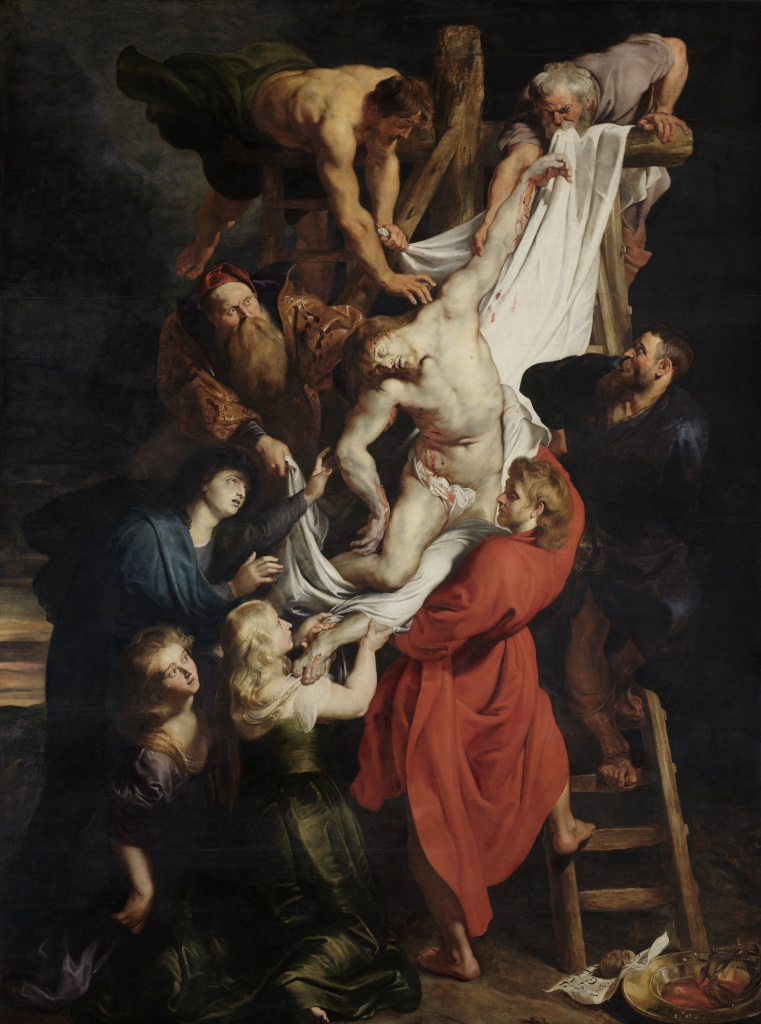
Upon the cross,
Your blood flowed
from Crown to Foot,
in streams upon Your Body,
so that there was not one space
that was not touched by Your Blood.
Your Body, the Church,
covered in Your Blood;
saved throughout Time
and for all Time
unto Eternity,
covered by Your Blood.
by Joann Nelander
Tuesday, February 25, 2014
Monday, February 24, 2014
Friday, February 21, 2014
Our Heart Longs for God
From the Tractates on the first letter of John by Saint Augustine, bishop
Our heart longs for God
We have been promised that we shall be like him, for we shall see him as he is. By these words, the tongue has done its best; now we must apply the meditation of the heart. Although they are the words of Saint John, what are they in comparison with the divine reality? And how can we, so greatly inferior to John in merit, add anything of our own? Yet we have received, as John has told us, an anointing by the Holy One which teaches us inwardly more than our tongue can speak. Let us turn to this source of knowledge, and because at present you cannot see, make it your business to desire the divine vision.
The entire life of a good Christian is in fact an exercise of holy desire. You do not yet see what you long for, but the very act of desiring prepares you, so that when he comes you may see and be utterly satisfied.
Suppose you are going to fill some holder or container, and you know you will be given a large amount. Then you set about stretching your sack or wineskin or whatever it is. Why? Because you know the quantity you will have to put in it and your eyes tell you there is not enough room. By stretching it, therefore, you increase the capacity of the sack, and this is how God deals with us. Simply by making us wait he increases our desire, which in turn enlarges the capacity of our soul, making it able to receive what is to be given to us.
So, my brethren, let us continue to desire, for we shall be filled. Take note of Saint Paul stretching as it were his ability to receive what is to come: Not that I have already obtained this, he said, or am made perfect. Brethren, I do not consider that I have already obtained it. We might ask him, “If you have not yet obtained it, what are you doing in this life? This one thing I do, answers Paul, forgetting what lies behind, and stretching forward to what lies ahead, I press on toward the prize to which I am called in the life above. Not only did Paul say he stretched forward, but he also declared that he pressed on toward a chosen goal. He realized in fact that he was still short of receiving what no eye has seen, nor ear heard, nor the heart of man conceived.
Such is our Christian life. By desiring heaven we exercise the powers of our soul. Now this exercise will be effective only to the extent that we free ourselves from desires leading to infatuation with this world. Let me return to the example I have already used, of filling an empty container. God means to fill each of you with what is good; so cast out what is bad! If he wishes to fill you with honey and you are full of sour wine, where is the honey to go? The vessel must be emptied of its contents and then be cleansed. Yes, it must be cleansed even if you have to work hard and scour it. It must be made fit for the new thing, whatever it may be.
We may go on speaking figuratively of honey, gold or wine—but whatever we say we cannot express the reality we are to receive. The name of that reality is God. But who will claim that in that one syllable we utter the full expanse of our heart’s desire? Therefore, whatever we say is necessarily less than the full truth. We must extend ourselves toward the measure of Christ so that when he comes he may fill us with his presence. Then we shall be like him, for we shall see him as he is.
via divineoffice.org
Monday, February 10, 2014
Loving Your Idle Neighbor | Values & Capitalism
RJ Moeller
R.J. Moeller graduated from Taylor University in 2005 with a degree in business and is currently a...Read more about RJ Moeller
It’s been a few weeks since I last posted something in my “Bible & Economics” series, but I think a return to the topic is well served by the verses from II Thessalonians I’ve selected to delve in to today. This passage, more than perhaps any other in all of the New Testament, is responsible for directing a younger version of the R.J. Moeller that blogs before you today on a path leading sharply away from conventional modern thinking on the topics of welfare, wealth redistribution and the seemingly inescapable “social justice.” (By the way, is there “social truth” or “social patience”?)
From II Thessalonians 3:6-12:
Now we command you, brothers, in the name of our Lord Jesus Christ, that you keep away from any brother who is walking in idleness and not in accord with the tradition that you received from us. For you yourselves know how you ought to imitate us, because we were not idle when we were with you, nor did we eat anyone’s bread without paying for it, but with toil and labor we worked night and day, that we might not be a burden to any of you. It was not because we do not have that right, but to give you in ourselves an example to imitate. For even when we were with you, we would give you this command: If anyone is not willing to work, let him not eat. For we hear that some among you walk in idleness, not busy at work, but busybodies. Now such persons we command and encourage in the Lord Jesus Christ to do their work quietly and to earn their own living.
A simple, straight-forward reading of this text is a clear and present danger to advocates of a welfare state, but especially to those who also claim allegiance to the body of Christ and his word. However, in a sinful, fallen world—one wrought with hypocrisies, guilt, past societal sins, etc.—“simple” and “straight-forward” are luxuries the thoughtful believer can rarely enjoy, at least not when entering the contentious fray of the public square with their theological convictions in tow (as they most definitely should).
So let me quickly give my brief exegetical overview of the passage above, and then connect a few dots between what Paul wrote and some of the appropriate conclusions one ought to be able to draw in terms of public policy debates.
Now there are some who try to deflect the very real importance of these verses to a Christian’s attitude about how best to help the poor by saying that the “idlers” Paul is calling out are simply misguided believers who are under the impression Christ’s return was imminent. This is a distinction without a difference. Being lazy on a nuclear submarine with the key that launches Armageddon might be different in form, but is no different in substance than an idle Dairy Queen worker who procrastinates sweeping up the sprinkles his portly manager asked him to take care of the previous day.
Habitual idleness is a matter of the heart. (Believe me, I know first-hand.)
Refusing to work or provide for your family because you’re convinced Jesus is returning over the upcoming three-day weekend is, according to scripture, just as much of a sin as an able-bodied human being refusing to work or provide for their family because some well-intentioned bureaucrat is intent on giving them money they didn’t earn.
Right off the bat in verse 6, Paul exhorts the church body to “keep away from” anyone who is living an idle, lazy life and remains needlessly dependent on others. Pretty harsh, no? Not very “social” of him, right? I’ll even admit that nearly every time I read these words, I wince a little. All of the “But what about…” exceptions and exemptions start piling up on my conscience.
But if we’re serious about scripture, we know that scripture is serious about sin. Idleness and making yourself a prolonged and unnecessary burden on someone else, is a sin. There’s no way around that. The Greek translation for the phrase “in idleness” translates to “in an undisciplined, irresponsible or disorderly manner.” Keep that definition in mind for later.
Verses 7-9 are Paul’s reminder that he hasn’t simply preached against things like idleness and being a burden on others, but has modeled for the good people of Thessalonica the appropriate way to live. Paul was a minister of the gospel, and therefore was entitled to living off of the charity that came from other believers. But he feared that a lifetime of such dependency would weaken his witness, and, I don’t think it is unfair to infer, his character.
Verse 10 is the big one: “For even when we were with you, we would give you this command: If anyone is not willing to work, let him not eat.” Paul did not teach this difficult practice of the Christian life from afar, but said it face-to-face. Christian friends don’t enjoy confronting friends. Christian parents don’t delight in having to withhold certain things from their beloved children. Confronting people with difficult subject matter is made no less daunting by how true the subject matter is. It stinks. No way around it.

Thursday, January 30, 2014
Love the Lord and Walk in His Ways
From a sermon by John the Serene, bishop
Love the Lord and walk in his ways
The Lord is my light and my salvation; whom shall I fear? How great was that servant who knew how he was given light, whence it came, and what sort of man he was when he was favored by that light. The light he saw was not that which fades at dusk, but the light which no eye has seen. Souls brightened by this light do not fall into sin or stumble on vice.
Our Lord said: Walk while you have the light in you. What other light did he mean but himself? For it was he who said: I have come as a light into the world, so that those who have eyes may not see and the blind may receive the light. The Lord then is our light, the sun of justice and righteousness, who has shone on his Catholic Church spread throughout the world. The prophet spoke as a figure of the Church when he cried: The Lord is my light and my salvation; whom shall I fear?
The spiritual man who has been thus illumined does not limp or leave the path, but bears all things. Glimpsing our true country from afar, he puts up with adversities; he is not saddened by the things of time, but finds his strength in God. He lowers his pride and endures, possessing patience through humility. That true light which enlightens every man who comes into the world bestows itself on those who reverence it, shining where it wills, on whom it wills, and revealing itself according to the will of God the Son.
When this light begins to shine upon the man who sat in darkness and the shadow of death, in the darkness of evil and the shadow of sin, he is shocked, he calls himself to account, repents of his misdeeds in shame, and says: The Lord is my light and my salvation; whom shall I fear? Great is this salvation, my brethren, which fears neither sickness nor lethargy and disregards pain. We should then in the fullest sense not only with our voice but with our very soul cry out, The Lord is my light and my salvation; whom shall I fear? If he enlightens and saves me, whom shall I fear? Even though the dark shadows of evil suggestions crowd about, the Lord is my light. They can approach, but cannot prevail; they can lay siege to our heart, but cannot conquer it. Though the blindness of concupiscence assails us, again we say: The Lord is my light. For he is our strength; he gives himself to us and we give ourselves to him. Hasten to this physician while you can, or you may not be able to find him when you want him.
Vatican Spokesman Censures ‘Rolling Stone’ Article on Pope |Blogs | NCRegister.com
by Edward Pentin Wednesday

Vatican spokesman Father Federico Lombardi has strongly criticised an article on Pope Francis that appears in the latest edition of Rolling Stone magazine.
Although he acknowledged that the Holy Father’s appearance on the publication’s front cover shows a diverse interest in the Pope, the Jesuit spokesman denounced the article's negative portrayal of Pope Emeritus Benedict XVI’s pontificate, saying the piece disqualifies itself as serious journalism.
“Unfortunately, the article disqualifies itself, falling into the usual mistake of a superficial journalism, which in order to highlight the positive aspects of Pope Francis, thinks it should describe in a negative way the pontificate of Pope Benedict, and does so with a surprising crudeness,” Fr. Lombardi said in a statement.
In the piece titled "Pope Francis: The Times They Are A-Changin'", author Mark Binelli calls Benedict’s papacy “disastrous” and goes so far as to attack the former pontiff’s appearance and character. He also describes Benedict’s acclaimed apostolic exhortation Sacramentum Caritatis as “wonky” but without explaining further.
Friday, January 24, 2014
Devotion must be practiced in different ways - St. Francis de Sales

From the Introduction to the Devout Life by Saint Francis de Sales, bishop
Devotion must be practiced in different ways
When God the Creator made all things, he commanded the plants to bring forth fruit each according to its own kind; he has likewise commanded Christians, who are the living plants of his Church, to bring forth the fruits of devotion, each one in accord with his character, his station and his calling.
I say that devotion must be practiced in different ways by the nobleman and by the working man, by the servant and by the prince, by the widow, by the unmarried girl and by the married woman. But even this distinction is not sufficient; for the practice of devotion must be adapted to the strength, to the occupation and to the duties of each one in particular.
Tell me, please, my Philothea, whether it is proper for a bishop to want to lead a solitary life like a Carthusian; or for married people to be no more concerned than a Capuchin about increasing their income; or for a working man to spend his whole day in church like a religious; or on the other hand for a religious to be constantly exposed like a bishop to all the events and circumstances that bear on the needs of our neighbor. Is not this sort of devotion ridiculous, unorganized and intolerable? Yet this absurd error occurs very frequently, but in no way does true devotion, my Philothea, destroy anything at all. On the contrary, it perfects and fulfills all things. In fact if it ever works against, or is inimical to, anyone’s legitimate station and calling, then it is very definitely false devotion.
The bee collects honey from flowers in such a way as to do the least damage or destruction to them, and he leaves them whole, undamaged and fresh, just as he found them. True devotion does still better. Not only does it not injure any sort of calling or occupation, it even embellishes and enhances it.
Moreover, just as every sort of gem, cast in honey, becomes brighter and more sparkling, each according to its color, so each person becomes more acceptable and fitting in his own vocation when he sets his vocation in the context of devotion. Through devotion your family cares become more peaceful, mutual love between husband and wife becomes more sincere, the service we owe to the prince becomes more faithful, and our work, no matter what it is, becomes more pleasant and agreeable.
It is therefore an error and even a heresy to wish to exclude the exercise of devotion from military divisions, from the artisans’ shops, from the courts of princes, from family households. I acknowledge, my dear Philothea, that the type of devotion which is purely contemplative, monastic and religious can certainly not be exercised in these sorts of stations and occupations, but besides this threefold type of devotion, there are many others fit for perfecting those who live in a secular state.
Therefore, in whatever situations we happen to be, we can and we must aspire to the life of perfection.

Thursday, January 23, 2014
Reaching Out to an Abortion-Wounded Nation | Daily News | NCRegister.com
A conversation with Project Rachel’s Vicki Thorn.
BY SUE ELLEN BROWDER 01/22/2014

Vicki Thorn, founder of Project Rachel.
As crowds of impassioned pro-lifers gather once again on Jan. 22 for the annual March for Life in Washington, Pope Francis has said more should be done in reaching out to women who’ve had abortions.
Vicki Thorn, founder of the post-abortion apostolate Project Rachel, recently spoke to Register correspondent Sue Ellen Browder about why abortion is still such a hot-button emotional issue and how Catholics can help pour “oil on the wounds” of abortion in our culture today.
As the March for Life unfolds once again, what’s the
via Reaching Out to an Abortion-Wounded Nation | Daily News | NCRegister.com.
