Divine Mercy Chaplet audio 

'All shall be well, and all manner of thing shall be well' Bl.Julian of Norwich
Showing posts with label Religion and Spirituality. Show all posts
Showing posts with label Religion and Spirituality. Show all posts
Friday, April 18, 2014
DIVINE MERCY NOVENA


Thursday, April 17, 2014
Wednesday, March 26, 2014
Prayer to the Powerful Babe

O, Jesus, True God,
Beginning human life
In the womb of Mary,
I come to You in Your first moments,
O powerful Babe.
Mother Mary's "Fiat"
Brought the Father's Will to Earth,
Wrapped in the stuff of Man,
Purity's Flesh emerging as cells divide.
I come to You, God-Man,
In Your holy beginning,
Awaiting, with all creation,
The formation of Your Sacred Heart
In Time.
O, Happy Fruition,
O, Incarnate Son,
In Mary's virginal womb,
Bless with inner healing
The whole of my life.
Bring to my concupiscence
Conformity to the Father's Will.
I am the least in my Father's house,
But by my spiritual visitation,
My willing presence,
In the nascent Being of the Christ,
One, so small and mean as me,
Can find a home
As the Heart of Jesus
Is formed and fired.
O, powerful Babe,
O, pure and holy Fetus,
I trust in You
From Your beginning
As Prophet, Priest and King,
To bring me,
And all creation,
To a happy end.
Amen
©Joann Nelander 2011
All rights reserved
Friday, March 14, 2014
Portal to Eternity
If the past has a portal,
I take up the Gift,
The blood of the Lamb,
And apply it to the door-posts,
And lintels,
That it may cry out for this sinner,
And my heritage,
That the Angel of Death
May pass me by.
Cry for me, My Beloved,
In my night,
That the past,
Now cleansed,
Open in Your Heart
A door to heavenly Eternity.
Cry, my Beloved,
Plead mercy on my history,
And newness of Life,
In this cleansed space of being,
New Creation,
A heart and soul after Your Own.
Henceforth and forever one.
© 2014 Joann Nelander

Thursday, March 6, 2014
Angel Story
Here is one of my personal angel stories:
Years ago my husband and I were in a movie theater engrossed in the movie, when suddenly I was inspired to pray, so I did. The feeling was so unexpected and strong, I stopped watching the screen, closed my eyes and turned my attention to prayer as I felt directed to do. Then I had peace and wondered what that was all about.
When we returned home, my, then teenaged, daughter couldn't wait to tell us what had happened. She said she was comfortably seated in an easy chair in the family room, reading a book. Then phone rang, so she reluctantly got out of the chair to answer it. As soon as she was out of the chair, a large and heavy sound unit that had been on the highest shelf in a built in bookcase, fell onto the every spot she had occupied just seconds before.
The light came on for me and I immediately understood why I was prodded to pray. My daughter and I remember this incident with thanksgiving to the angels to this day!
©2013 Joann Nelander

Wednesday, March 5, 2014
Listening and Silent
It seems...
I am always talking to You,
That I am always with You,
And have no doubt
You are with me,
Listening and silent.
I am an endless monologue.
You, hovering Spirit,
Wordlessly eloquent
Abide.
You are Presence and Truth,
Listening and silent,
Thunderously silent,
Save for the stirring of my heart,
And the sometime rush of thought,
Coming, as it were,
From the bowels of my being
With frightening conviction,
And challenging my reticence
To speak aloud
The thoughts of solitude.
Reluctant always
To go about,
And leave the cloister of my heart,
Where in Your chambers I find,
And hold dear,
Private audience with the King,
The world without is a noisy charade,
And woos the pride of me take center stage.
Where suddenly I realize
I have been talking much, too much,
To my regret.
I, naggingly, suspect
I have diminished
What was my treasure
And ceased to learn.
Cacophany of me,
I cease to learn,
And simply rearrange,
That with which I am familiar.
Where do prophet, poet and a would be recluse
Find voice if not in You,
Rejecting even audience
To find You in my silence,
Your silence?
©2012 Joann Nelander
All rights reserved
The Breech
How great is the distance between us?
Some would say
The span from East to West,
Or measure in miles the chasm
Stretching from Heaven to Hell.
Others count the centuries
Since Your earthly Presence
In hallowed flesh.
There is no numbering
Eternity or Divinity.
You are closer than my breath.
Your Heart beats within my breast.
Day by day,
Nay, moment by moment,
I pick up Your rhythm.
Traversing the breech,
You make me Your own.
Small, but beloved,
I repose in willful abandonment.
Grace-filled faith,
A movement,
Not a measure,
Soars to the heavens,
In flights of trust in You.
Tuesday, March 4, 2014
Upon the Cross
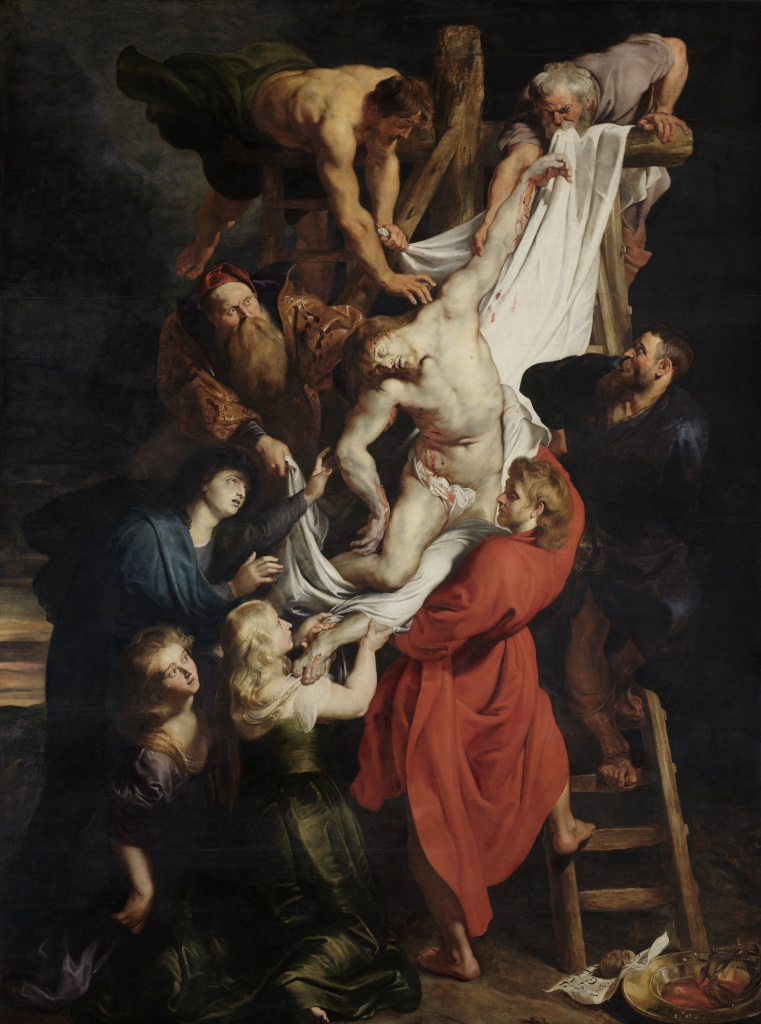
Upon the cross,
Your blood flowed
from Crown to Foot,
in streams upon Your Body,
so that there was not one space
that was not touched by Your Blood.
Your Body, the Church,
covered in Your Blood;
saved throughout Time
and for all Time
unto Eternity,
covered by Your Blood.
by Joann Nelander
Monday, February 24, 2014
Friday, February 21, 2014
Holy Desire – St. Augustine
"The entire life of a good Christian is in fact an exercise of holy desire. You do not yet see what you long for, but the very act of desiring prepares you, so that when he comes you may see and be utterly satisfied."
“Suppose you are going to fill some holder or container, and you know you will be given a large amount. Then you set about stretching your sack or wineskin or whatever it is. Why? Because you know the quantity you will have to put in it and your eyes tell you there is not enough room. By stretching it, therefore, you increase the capacity of the sack, and this is how God deals with us. Simply by making us wait he increases our desire, which in turn enlarges the capacity of our soul, making it able to receive what is to be given to us.”
Monday, February 10, 2014
Loving Your Idle Neighbor | Values & Capitalism
RJ Moeller
R.J. Moeller graduated from Taylor University in 2005 with a degree in business and is currently a...Read more about RJ Moeller
It’s been a few weeks since I last posted something in my “Bible & Economics” series, but I think a return to the topic is well served by the verses from II Thessalonians I’ve selected to delve in to today. This passage, more than perhaps any other in all of the New Testament, is responsible for directing a younger version of the R.J. Moeller that blogs before you today on a path leading sharply away from conventional modern thinking on the topics of welfare, wealth redistribution and the seemingly inescapable “social justice.” (By the way, is there “social truth” or “social patience”?)
From II Thessalonians 3:6-12:
Now we command you, brothers, in the name of our Lord Jesus Christ, that you keep away from any brother who is walking in idleness and not in accord with the tradition that you received from us. For you yourselves know how you ought to imitate us, because we were not idle when we were with you, nor did we eat anyone’s bread without paying for it, but with toil and labor we worked night and day, that we might not be a burden to any of you. It was not because we do not have that right, but to give you in ourselves an example to imitate. For even when we were with you, we would give you this command: If anyone is not willing to work, let him not eat. For we hear that some among you walk in idleness, not busy at work, but busybodies. Now such persons we command and encourage in the Lord Jesus Christ to do their work quietly and to earn their own living.
A simple, straight-forward reading of this text is a clear and present danger to advocates of a welfare state, but especially to those who also claim allegiance to the body of Christ and his word. However, in a sinful, fallen world—one wrought with hypocrisies, guilt, past societal sins, etc.—“simple” and “straight-forward” are luxuries the thoughtful believer can rarely enjoy, at least not when entering the contentious fray of the public square with their theological convictions in tow (as they most definitely should).
So let me quickly give my brief exegetical overview of the passage above, and then connect a few dots between what Paul wrote and some of the appropriate conclusions one ought to be able to draw in terms of public policy debates.
Now there are some who try to deflect the very real importance of these verses to a Christian’s attitude about how best to help the poor by saying that the “idlers” Paul is calling out are simply misguided believers who are under the impression Christ’s return was imminent. This is a distinction without a difference. Being lazy on a nuclear submarine with the key that launches Armageddon might be different in form, but is no different in substance than an idle Dairy Queen worker who procrastinates sweeping up the sprinkles his portly manager asked him to take care of the previous day.
Habitual idleness is a matter of the heart. (Believe me, I know first-hand.)
Refusing to work or provide for your family because you’re convinced Jesus is returning over the upcoming three-day weekend is, according to scripture, just as much of a sin as an able-bodied human being refusing to work or provide for their family because some well-intentioned bureaucrat is intent on giving them money they didn’t earn.
Right off the bat in verse 6, Paul exhorts the church body to “keep away from” anyone who is living an idle, lazy life and remains needlessly dependent on others. Pretty harsh, no? Not very “social” of him, right? I’ll even admit that nearly every time I read these words, I wince a little. All of the “But what about…” exceptions and exemptions start piling up on my conscience.
But if we’re serious about scripture, we know that scripture is serious about sin. Idleness and making yourself a prolonged and unnecessary burden on someone else, is a sin. There’s no way around that. The Greek translation for the phrase “in idleness” translates to “in an undisciplined, irresponsible or disorderly manner.” Keep that definition in mind for later.
Verses 7-9 are Paul’s reminder that he hasn’t simply preached against things like idleness and being a burden on others, but has modeled for the good people of Thessalonica the appropriate way to live. Paul was a minister of the gospel, and therefore was entitled to living off of the charity that came from other believers. But he feared that a lifetime of such dependency would weaken his witness, and, I don’t think it is unfair to infer, his character.
Verse 10 is the big one: “For even when we were with you, we would give you this command: If anyone is not willing to work, let him not eat.” Paul did not teach this difficult practice of the Christian life from afar, but said it face-to-face. Christian friends don’t enjoy confronting friends. Christian parents don’t delight in having to withhold certain things from their beloved children. Confronting people with difficult subject matter is made no less daunting by how true the subject matter is. It stinks. No way around it.

Tuesday, January 28, 2014
Sunday, January 26, 2014
Thursday, January 23, 2014
A Prayer of Abandonment
God has created me to do some definite service. God has committed some work to
me which He has not committed to another. I have my mission—I am a link in a
chain, a bond of connection between persons. I have not been created for naught. I
shall do good. I shall do God’s work. I shall be an angel of peace, a preacher of truth
in my own place, while not intending it, if I do but keep the commandments.
Therefore I will trust in God. Whatever, wherever I am, I can never be thrown away.
If I am in sickness, my sickness may serve God; in perplexity, my perplexity may serve
God; if I am in sorrow, my sorrow may serve God. God does nothing in vain, but
knows what all is about.
~ John Henry Newman
Tuesday, December 10, 2013
Candles on Altars

All men are candles,
Burning on some altar.
Some disappear into nothingness,
Before worldly idols,
Unable to sustain their spark
Beyond the veil,
Into eternity.
Others light the heavens
As they are consumed
On the altar of Love,
Merging imperceptibly,
Creature with Creator.
When my wax is spent,
I pray I am not distracted
By my sin.
When I melt
Into the arms of God,
May it be that Love,
That lit my flame,
Outshines my imperfections
In holy consummation.
Burn candle, all alight
Warming with mercy rays the night,
To Penetrate hearts of friend and foe,
To soothe and mend wounds,
Dispelling darkness
With the Uncreated Light
That set creation into being.
Now and forever,
I cast myself
Into the flame,
The furnace of His Sacred Heart.
Passing through pierced side,
One with the Virgin,
Holy angels and expurgated saints of ole,
Melted in union,
I am formed anew in Christ,
With the Father and Spirit,
Candle, altar and Salvation might.
© 2013 Joann Nelander
All rights reserved
Sunday, December 8, 2013
The Dark Age Myth: An Atheist Reviews “God’s Philosophers”
The Dark Age Myth: An Atheist Reviews “God’s Philosophers”
by Tim O'Neill
For years I've been toying with the idea of creating a website on Medieval science and technology to bring the recent research on the subject to a more general audience and to counter the biased myths about it being a Dark Age of irrational superstition. Thankfully I can now cross that off my to do list, because Hannam's superb book,Hannam's God's Philosophers: How the Medieval World Laid the Foundations of Modern Science
has done the job for me and in fine style.
The Christian Dark Age and Other Hysterical Myths

One of the occupational hazards of being an atheist and secular humanist who hangs around on discussion boards is to encounter a staggering level of historical illiteracy. I like to console myself that many of the people on such boards have come to their atheism via the study of science and so, even if they are quite learned in things like geology and biology, usually have a grasp of history stunted at about high school level. I generally do this because the alternative is to admit that the average person's grasp of history and how history is studied is so utterly feeble as to be totally depressing.
So, alongside the regular airings of the hoary old myth that the Bible was collated at the Council of Nicea, the tedious internet-based "Jesus never existed!" nonsense, or otherwise intelligent people spouting pseudo historical claims that would make even Dan Brown snort in derision, the myth that the Catholic Church caused the Dark Ages and the Medieval Period was a scientific wasteland is regularly wheeled, creaking, into the sunlight for another trundle around the arena.
The myth goes that the Greeks and Romans were wise and rational types who loved science and were on the brink of doing all kinds of marvelous things (inventing full-scale steam engines is one example that is usually, rather fancifully, invoked) until Christianity came along. Christianity then banned all learning and rational thought and ushered in the Dark Ages. Then an iron-fisted theocracy, backed by a Gestapo-style Inquisition, prevented any science or questioning inquiry from happening until Leonardo da Vinci invented intelligence and the wondrous Renaissance saved us all from Medieval darkness.
Read more: The Dark Age Myth: An Atheist Reviews "God's Philosophers" | Strange Notions.
Saturday, November 30, 2013
Wednesday, November 27, 2013
APOSTOLIC EXHORTATION EVANGELII GAUDIUM OF THE HOLY FATHER FRANCIS
1. THE JOY OF THE GOSPEL fills the hearts and lives of all who encounter Jesus. Those who accept his offer of salvation are set free from sin, sorrow, inner emptiness and loneliness. With Christ joy is constantly born anew. In this Exhortation I wish to encourage the Christian faithful to embark upon a new chapter of evangelization marked by this joy, while pointing out new paths for the Church’s journey in years to come.
I. A JOY EVER NEW, A JOY WHICH IS SHARED
2. The great danger in today’s world, pervaded as it is by consumerism, is the desolation and anguish born of a complacent yet covetous heart, the feverish pursuit of frivolous pleasures, and a blunted conscience. Whenever our interior life becomes caught up in its own interests and concerns, there is no longer room for others, no place for the poor. God’s voice is no longer heard, the quiet joy of his love is no longer felt, and the desire to do good fades. This is a very real danger for believers too. Many fall prey to it, and end up resentful, angry and listless. That is no way to live a dignified and fulfilled life; it is not God’s will for us, nor is it the life in the Spirit which has its source in the heart of the risen Christ.
3. I invite all Christians, everywhere, at this very moment, to a renewed personal encounter with Jesus Christ, or at least an openness to letting him encounter them; I ask all of you to do this unfailingly each day. No one should think that this invitation is not meant for him or her, since “no one is excluded from the joy brought by the Lord”.[1] The Lord does not disappoint those who take this risk; whenever we take a step towards Jesus, we come to realize that he is already there, waiting for us with open arms. Now is the time to say to Jesus: “Lord, I have let myself be deceived; in a thousand ways I have shunned your love, yet here I am once more, to renew my covenant with you. I need you. Save me once again, Lord, take me once more into your redeeming embrace”. How good it feels to come back to him whenever we are lost! Let me say this once more: God never tires of forgiving us; we are the ones who tire of seeking his mercy. Christ, who told us to forgive one another “seventy times seven” (Mt 18:22) has given us his example: he has forgiven us seventy times seven. Time and time again he bears us on his shoulders. No one can strip us of the dignity bestowed upon us by this boundless and unfailing love. With a tenderness which never disappoints, but is always capable of restoring our joy, he makes it possible for us to lift up our heads and to start anew. Let us not flee from the resurrection of Jesus, let us never give up, come what will. May nothing inspire more than his life, which impels us onwards!
Wednesday, November 20, 2013
Albuquerque is Stilling Willing to Take Innocent Life
First Reading for this day -
2 MC 7:1, 20-31
What has God said to both Jews and Christians in Maccabees about life? (Some Protestants do not have Maccabees in their Bibles, but they should note that the Feast of Dedication, or Hanukkah, was enjoined upon the Jews to be celebrated only in Maccabees. John 7 tells of Jesus going up to Jerusalem to celebrate this feast. So Jesus concurred with the Jews and honored the injunction of Maccabees as given by His Father and recorded in holy writ.)
2 MC 7
“Most admirable and worthy of everlasting remembrance was the mother,
who saw her seven sons perish in a single day,
yet bore it courageously because of her hope in the Lord.
Filled with a noble spirit that stirred her womanly heart with manly courage,
she exhorted each of them
in the language of their ancestors with these words:
“I do not know how you came into existence in my womb;
it was not I who gave you the breath of life,
nor was it I who set in order
the elements of which each of you is composed.
Therefore, since it is the Creator of the universe
who shapes each man’s beginning,
as he brings about the origin of everything,
he, in his mercy,
will give you back both breath and life,
because you now disregard yourselves for the sake of his law.”
The response of this heroic woman’s son before his life was ended in accordance with an unjust law is also worth noting:
She had scarcely finished speaking when the youth said:
“What are you waiting for?
I will not obey the king’s command.
I obey the command of the law given to our fathers through Moses.
But you, who have contrived every kind of affliction for the Hebrews,
will not escape the hands of God.”
Our laws do not excuse us before God this day or on our particular judgment day, so our choices matter for our eternity. What we choose to do with our freedom matters in life and in death. Therefore it is incumbent upon us to choose wisely and form our consciences as though our eternity depends on it.
Subscribe to:
Posts (Atom)